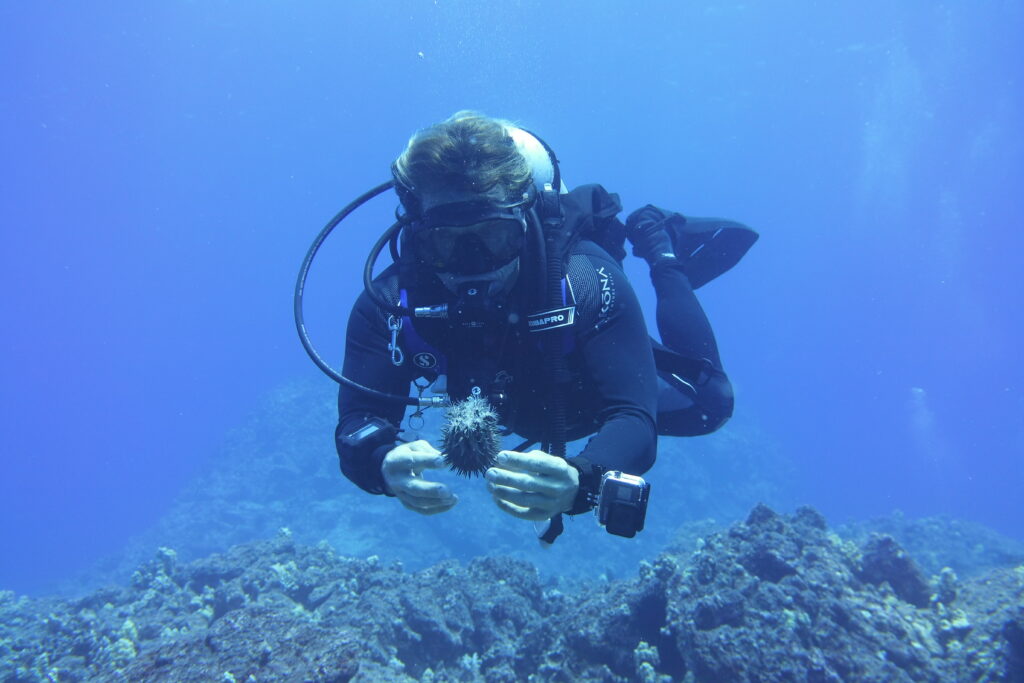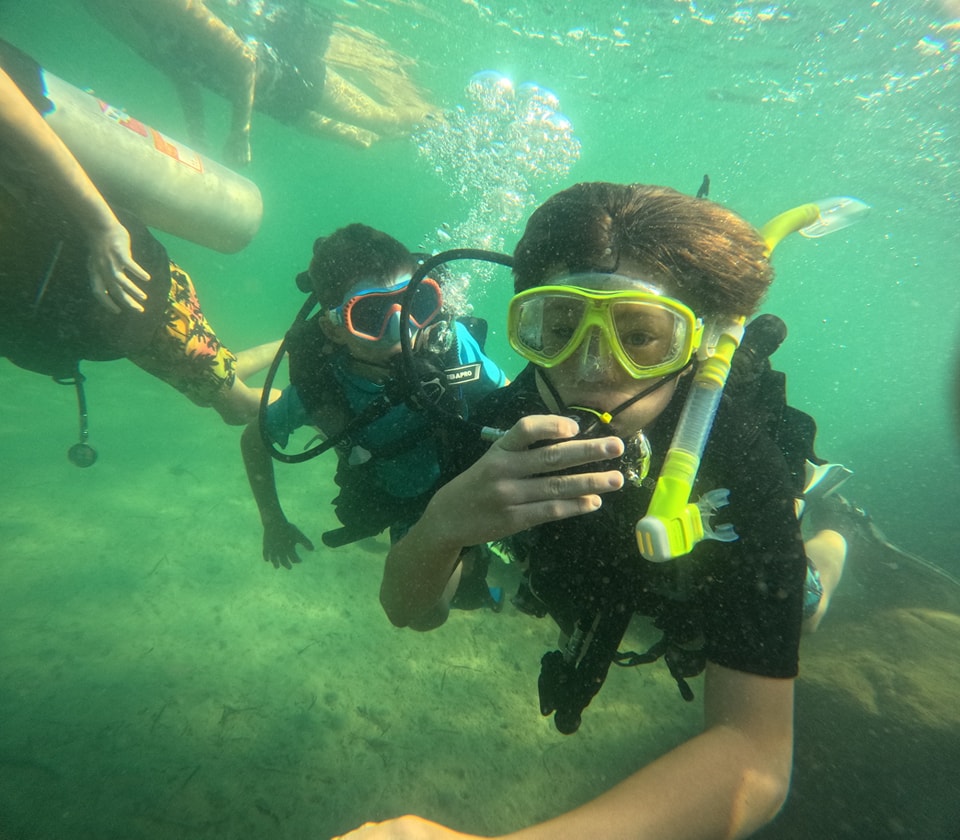
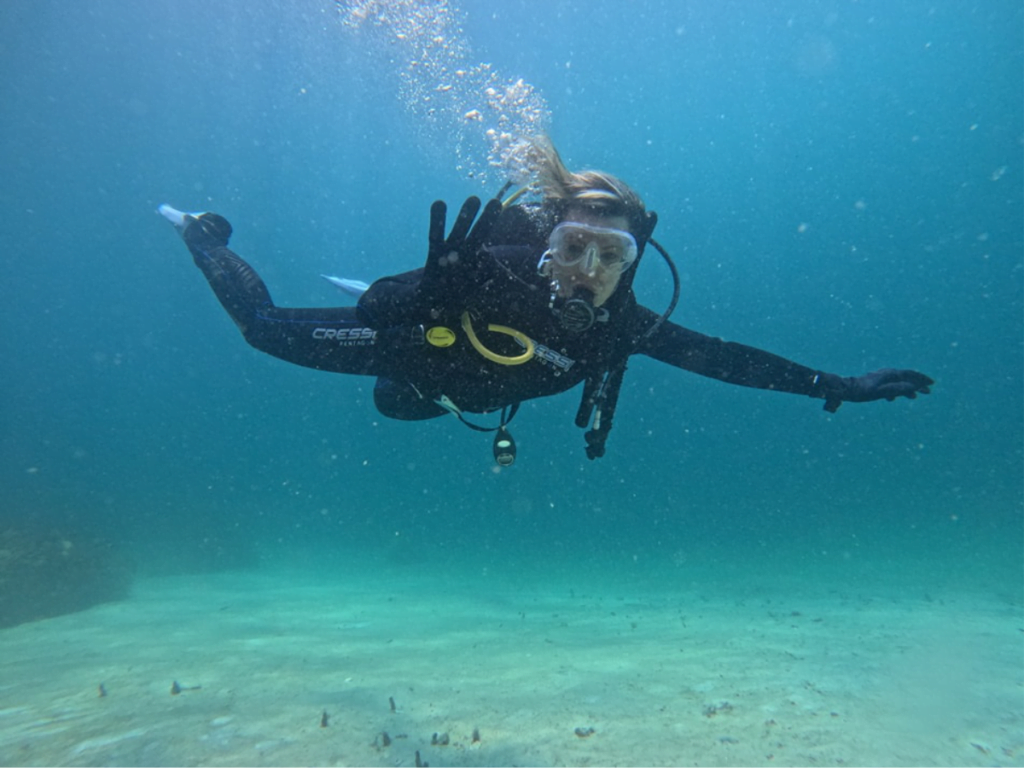
A first scuba dive can feel overwhelming without proper preparation. New divers often face unfamiliar equipment, new sensations, and natural nervousness, which can affect comfort and confidence underwater. This is why scuba diving preparation plays a critical role before entering the water.
Good preparation improves safety by reducing stress, helping divers stay calm, and ensuring they understand what to expect. It also increases comfort and enjoyment, allowing beginners to focus on breathing, movement, and the underwater experience rather than uncertainty. This guide covers physical, mental, and logistical preparation, giving beginners clear and practical steps to feel ready for their first scuba dive.
Physical Preparation For Your First Scuba Dive
Physical preparation for scuba diving is about feeling comfortable and well-rested, not being an athlete. When beginners prepare correctly, they reduce fatigue, stay calmer underwater, and enjoy the dive more.
Basic Fitness And Water Comfort
Being “fit enough to dive” means having basic mobility, the ability to move calmly in water, and comfort wearing equipment. You do not need high endurance or strength. Beginners should be able to swim short distances, float comfortably, and follow instructions without panic.
Swimming expectations are often misunderstood. Scuba diving is not active swimming like laps in a pool. Movement is slow and controlled, using fins and buoyancy rather than arm strength. Comfort in water matters far more than swimming speed or technique.
Sleep, Hydration, And Nutrition Before Diving
Rest is more important than physical strength before a dive. A good night’s sleep helps with focus, breathing control, and stress management underwater. Fatigue can increase anxiety and make basic tasks feel harder than they are.
Hydration is essential. Drink water before diving to support circulation and reduce headaches or fatigue. Eat a light, balanced meal that includes protein and complex carbohydrates. Avoid heavy, greasy foods that can cause discomfort. Alcohol and dehydration should be avoided before diving, as they increase fatigue and reduce awareness, negatively affecting scuba diving safety.
Medical And Health Preparation
Medical preparation is a key part of scuba diving safety. It helps identify risks early and ensures beginners dive only when their health allows it. Most people can scuba dive, but some conditions require extra care or medical approval.
Medical Questionnaire Explained
The medical questionnaire exists to protect divers, not to exclude them. It screens for conditions that could be affected by pressure changes, breathing compressed air, or physical exertion underwater.
Common conditions beginners ask about include asthma, ear problems, heart conditions, high blood pressure, diabetes, and past surgeries. Some conditions are not allowed without medical clearance, while others are usually okay but require caution and honest discussion with the instructor.
When You Need Medical Clearance
Certain conditions are clear red flags and require medical approval before diving. These include uncontrolled asthma, serious heart or lung conditions, recent surgeries, severe ear or sinus problems, and any condition that affects consciousness or breathing. If you experience chest pain, frequent dizziness, or shortness of breath during normal activity, you should not dive without clearance.
Conditions that are often allowed with caution include well-controlled asthma, stable high blood pressure, mild anxiety, and past injuries that do not limit movement. In these cases, medical clearance ensures scuba diving can be done safely and responsibly.
Managing Minor Issues Before A Dive
Mild congestion can be a problem because it affects equalization. If you cannot equalize comfortably on land, you should postpone the dive rather than force it. Diving while congested increases the risk of ear or sinus injury.
Seasickness is common and manageable. Eating light meals, staying hydrated, and using approved motion sickness remedies can help. Let your instructor know if you are prone to motion sickness.
Anxiety-related symptoms are normal for beginners. Nervousness, increased breathing, or tension usually improve with clear instruction and calm pacing. Communicating openly with the instructor helps manage anxiety safely and prevents unnecessary stress underwater.
Mental Preparation For Your First Scuba Dive
Feeling nervous before your first dive is completely normal. Scuba diving involves new equipment, unfamiliar sensations, and a different environment, which naturally triggers anxiety. Most first-time fear comes from the unknown, not from actual danger. Understanding that instructors expect beginners to feel this way helps reduce pressure and allows you to approach the dive with curiosity instead of fear.
Setting Realistic Expectations
A first scuba dive feels calm, slow, and guided. Movements are controlled, breathing is steady, and instructors manage the pace. Beginners do not need to worry about complex skills, strong swimming, or remembering everything at once. You are not expected to perform perfectly. The goal is comfort, safety, and enjoyment, not mastery.
How To Mentally Prepare On Dive Day
On dive day, focus on your breathing mindset. Slow, relaxed breaths help control anxiety and conserve energy. Listen carefully to your instructor and follow guidance step by step rather than thinking ahead. Trusting the process and staying present allows beginners to feel supported and confident throughout their first scuba diving experience.
What To Bring For Your First Scuba Dive
You should bring swimwear to wear under your wetsuit, as well as a towel for after the dive. Identification is often required for check-in, waivers, and certification verification if applicable. These basic items ensure a smooth start to your scuba diving experience.
Helpful Optional Items
Reef-safe sunscreen is recommended to protect your skin and the marine environment, especially for surface time before or after the dive. If you are prone to motion sickness, approved motion sickness aids can help during boat rides. A personal mask, if you already own one, can improve comfort and fit, though it is not required. A smart device with a Gopro Quik app installed to get your videos and pictures after the debriefing.
What Not To Bring
Avoid bringing jewelry, as it can be lost or damaged. Makeup, foundation, and any fake lashes or nails will only provide discomfort making your face mask slippery and leaking. Valuables such as expensive electronics or large amounts of cash should be left behind. Heavy accessories are unnecessary and can interfere with comfort and safety during your first scuba dive.
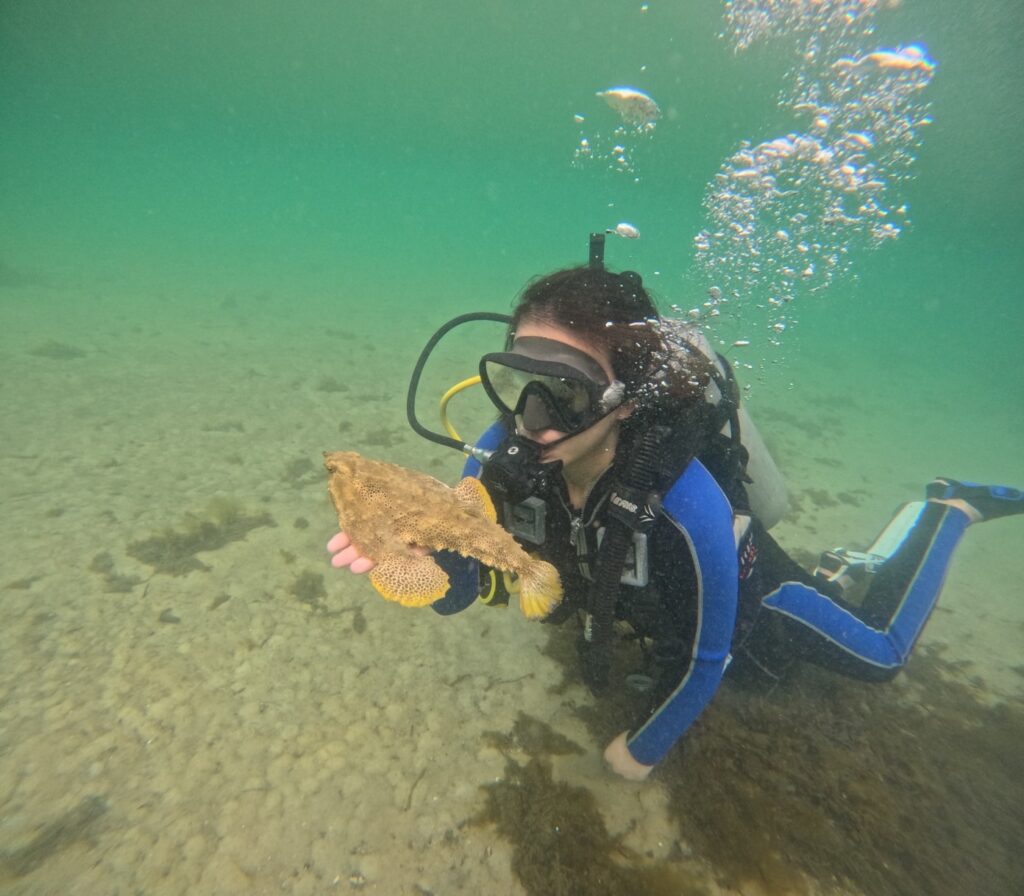
First Scuba Dive Checklist (Beginner-Friendly)
This simple checklist is designed to help beginners feel organized, calm, and fully prepared before their first scuba dive, reducing stress and improving overall safety and enjoyment.
- Sleep well the night before to support focus, calm breathing, and overall comfort.
- Stay hydrated starting the day before your dive and avoid alcohol.
- Apply reef-safe sunscreen at least 20–30 minutes before the dive to protect your skin and the marine environment.
- Wear your swimwear under your clothes so you can change quickly and comfortably.
- Bring a towel for after the dive.
- Use water shoes or flip-flops to protect your feet on docks, boats, or rocky entry points.
- Bring a reusable water bottle and drink water before and after the dive.
- Pack a light snack for after the dive if allowed.
- Bring motion sickness medication if you are prone to seasickness, and take it before boarding the boat if recommended.
- Remove jewelry and watches to avoid loss or damage.
- Remove makeup, foundation, long fake lashes or nails
- Leave valuables behind, including wallets, expensive electronics, and unnecessary accessories.
Arrive early to check-in and so you are not rushed and have time to relax and ask questions.
Understanding The Dive Briefing
The dive briefing is not a formality. It is the moment where safety, expectations, and trust are established. For beginners, the briefing connects everything learned on land with what will actually happen underwater, reducing uncertainty and preventing avoidable mistakes.
What Instructors Explain And Why
Instructors explain safety rules first because they define the boundaries of the dive. These rules include depth limits, ascent behavior, and how to respond to discomfort. They exist to prevent panic, injuries, and confusion underwater.
Hand signals are explained in context, not just as gestures. Instructors show when a signal should be used, how quickly to respond, and how signals help identify issues before they become problems.
Emergency plans are shared to create reassurance, not fear. Instructors explain where backup air sources are, how assistance will be given, and how situations are handled calmly and methodically. Knowing there is a clear plan allows beginners to relax and trust the process.
Questions Beginners Should Always Ask
Beginners should ask about depth to understand the physical limits of the dive and why that depth is appropriate for their level. Asking about duration clarifies how long the dive will last and how air supply is managed. Understanding the exit plan—where and how the dive will end—removes uncertainty and helps beginners visualize the full dive from start to finish.
Engaging in the briefing builds awareness and shows readiness, not inexperience.
Common Preparation Mistakes Beginners Make
- Skipping meals – Many beginners avoid eating out of fear of discomfort, but diving on an empty stomach can lead to low energy, dizziness, and increased anxiety. A light, balanced meal helps maintain focus and stamina.
- Overthinking gear – Beginners often worry too much about equipment details, assuming they need to understand everything in advance. In reality, instructors handle setup and checks. Comfort and fit matter more than technical knowledge.
- Not asking questions – Holding back questions out of fear of looking inexperienced can increase uncertainty and stress. Asking questions is encouraged and helps prevent confusion underwater.
- Comparing themselves to others – Every diver learns at a different pace. Comparing yourself to more confident or experienced divers can create unnecessary pressure. Focusing on your own comfort and progress leads to a better first dive experience.
Drinking alcohol, or using anything that affect awareness – Some medications might be allowed by a physician, as well as some substances, often referred to as a plant-based, psychoactive compound, known for its therapeutic, medicinal, or recreational effects. They are all strictly prohibited when planning on scuba diving for safety reasons.
Final Thoughts: Prepare Well, Dive Calmly
A calm and enjoyable first scuba dive starts long before entering the water. Preparation gives beginners a sense of control, reduces uncertainty, and allows them to focus on the experience rather than the unknown.
Why Preparation Builds Confidence
Preparation creates control by helping beginners understand what to expect and how to respond. It builds trust in the instructor, equipment, and process, reducing fear and hesitation. Most importantly, good preparation leads to enjoyment, allowing beginners to relax, breathe calmly, and appreciate the underwater environment.
When you feel ready, book a beginner dive with certified instructors in a controlled environment. Continue building knowledge by reviewing scuba diving safety and depth guides. Exploring beginner-friendly dive locations is the next step toward gaining experience and confidence underwater.