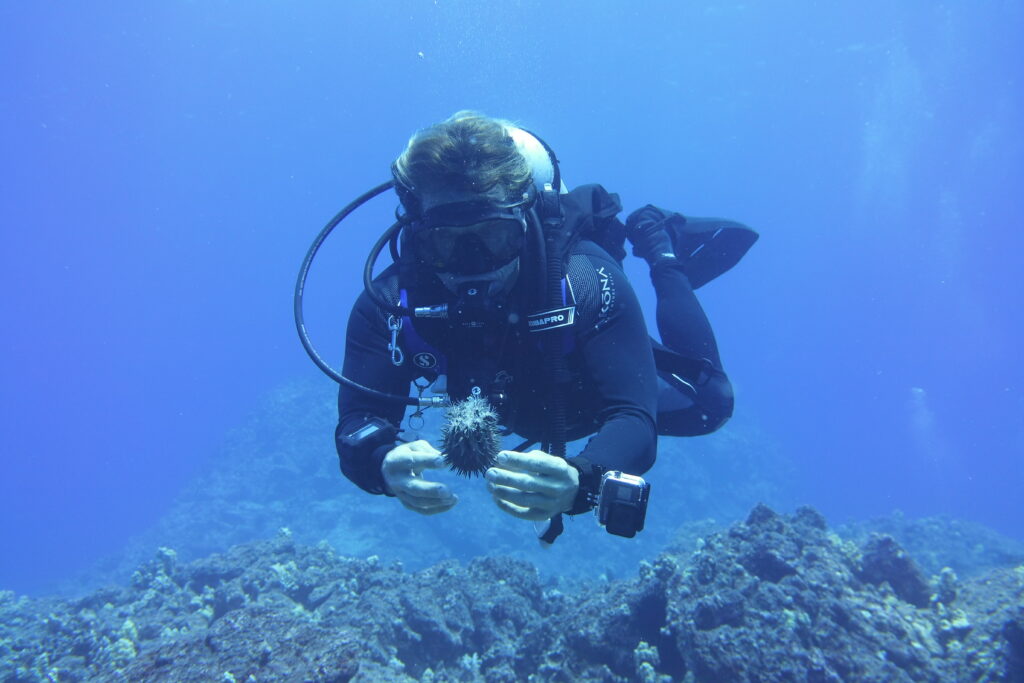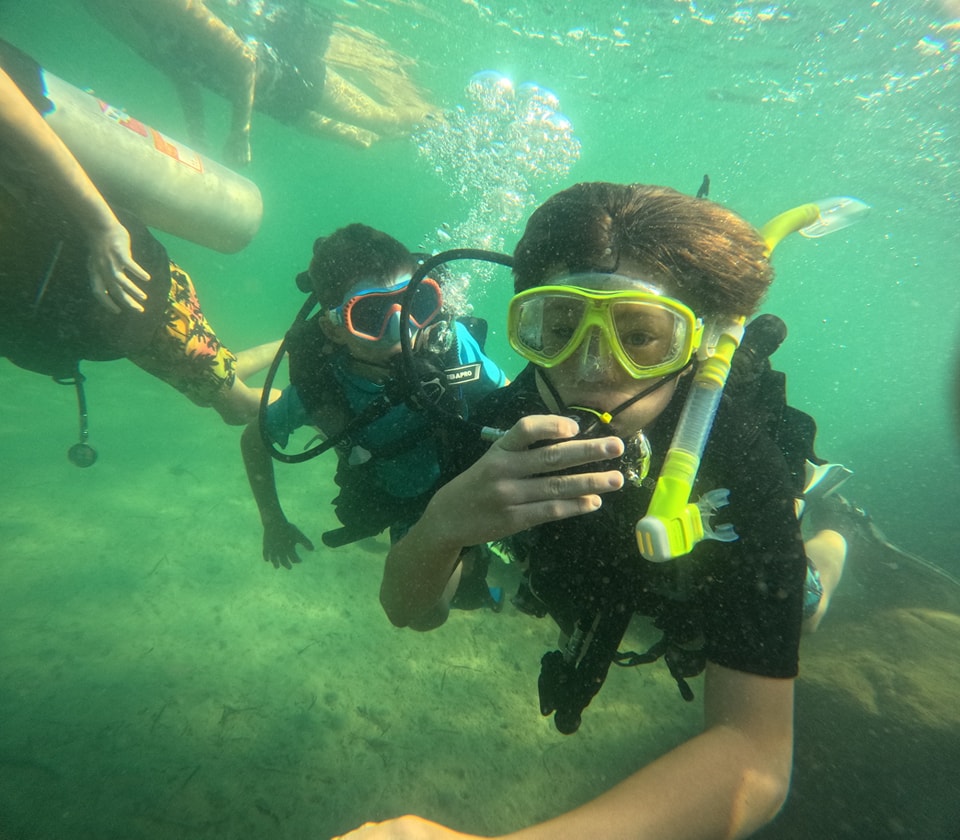

Scuba diving safety is the foundation of every successful dive, especially for beginners. The underwater environment is controlled through training, clear procedures, and proper supervision, which allows new divers to explore safely and confidently.
Many beginners worry about breathing underwater, managing equipment, or handling unexpected situations. These concerns are normal and are the reason safety systems are built into every beginner dive. This guide explains essential scuba diving safety principles, shares practical beginner scuba diving tips, and introduces a clear scuba safety checklist to help new divers prepare, dive, and surface with confidence.
Why Scuba Diving Is Safe When Done Correctly
Scuba diving safety is based on structure, preparation, and professional oversight. When these elements are followed, scuba diving becomes a highly controlled activity designed to minimize risk, especially for beginners.
Training And Safety Standards
Scuba diving follows global training systems that are recognized worldwide. These systems teach essential skills in a step-by-step manner and ensure consistent safety practices across dive centers. Standardized procedures guide everything from equipment setup to emergency responses, creating a predictable and safe environment for beginner scuba diving.
Modern Equipment And Built-In Safety Features
Modern scuba equipment is designed with multiple layers of safety. Redundancy systems, such as backup air sources, provide added protection in case of unexpected issues. Pressure and air monitoring tools allow divers and instructors to track air supply and depth in real time, reducing the chance of unsafe situations.
Instructor Supervision And Risk Control
Instructor supervision is a core part of scuba diving safety for beginners. Dives are guided from start to finish, with instructors controlling depth, pace, and positioning. Beginner dives take place in controlled conditions chosen specifically for safety, allowing new divers to learn and explore with confidence.
Beginner Scuba Diving Safety Tips Before The Dive
Before diving, beginners complete a medical questionnaire to identify conditions that could affect safety, such as heart, lung, or ear issues. This step ensures diving is appropriate or that medical clearance is provided if needed. Basic fitness is also important. Beginners should feel comfortable in the water and capable of light physical activity without strain.
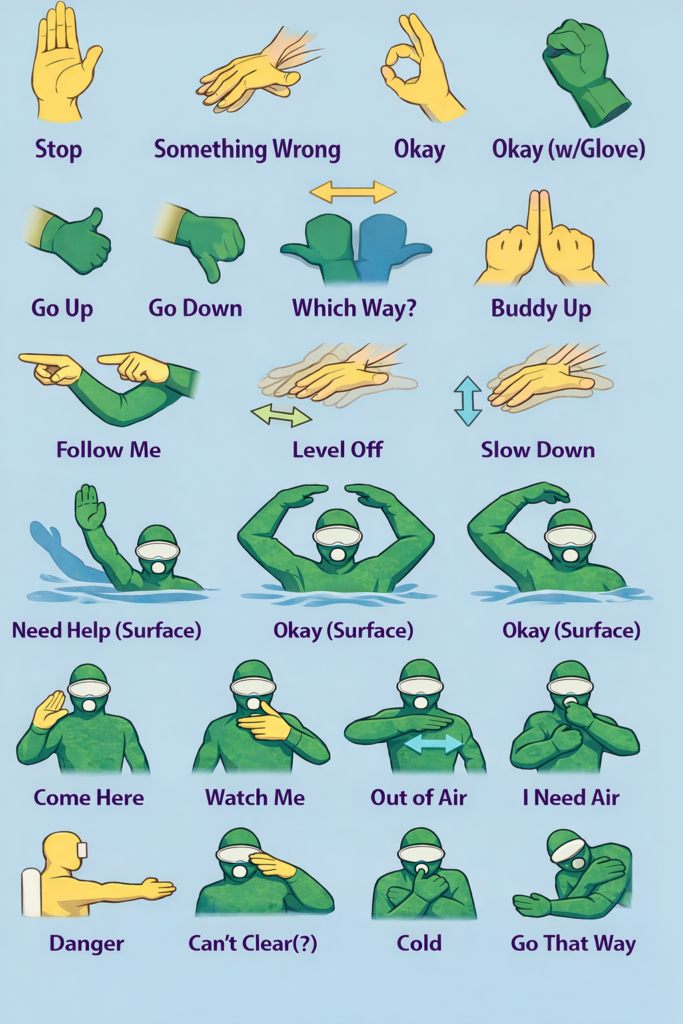
Additionally, every beginner dive includes a pre-dive safety briefing led by the instructor. This briefing explains essential hand signals used for underwater communication and reviews emergency procedures. Understanding these basics ensures beginners know how to respond calmly if assistance is needed.
Mental readiness is just as important as physical preparation. Staying calm helps regulate breathing and improve focus underwater. Beginners are encouraged to manage anxiety by asking questions, moving at their own pace, and trusting instructor guidance. A relaxed mindset supports safer and more enjoyable scuba diving.
Scuba Safety Checklist For Beginners
Using a simple scuba safety checklist reduces mistakes and builds confidence before entering the water. Beginners can review this list with their instructor to ensure they are fully prepared for a safe dive.
- Hydration – Drink water before the dive and avoid alcohol. Proper hydration helps reduce fatigue and supports overall safety.
- Rest – Make sure you are well rested. Fatigue can increase stress and reduce focus underwater.
- Focused – Avoid consumption of any intoxicating substances
- Comfort Level – Confirm that you feel calm and ready to dive. If something feels off, speak with your instructor before entering the water.
- Mask And Fins – Check that your mask fits properly and seals well, and that fins are comfortable and secure.
- Regulator Check – Take a few test breaths to confirm smooth airflow from both the primary and backup regulator.
- BCD Function – Inflate and deflate the buoyancy control device to ensure it responds correctly.
- Air Pressure – Verify that the tank is full and that the pressure gauge shows a safe air level before the dive.
This scuba safety checklist helps beginners follow essential scuba diving safety practices and reduces the chance of issues during the dive.
Beginner Scuba Diving Safety Tips During The Dive
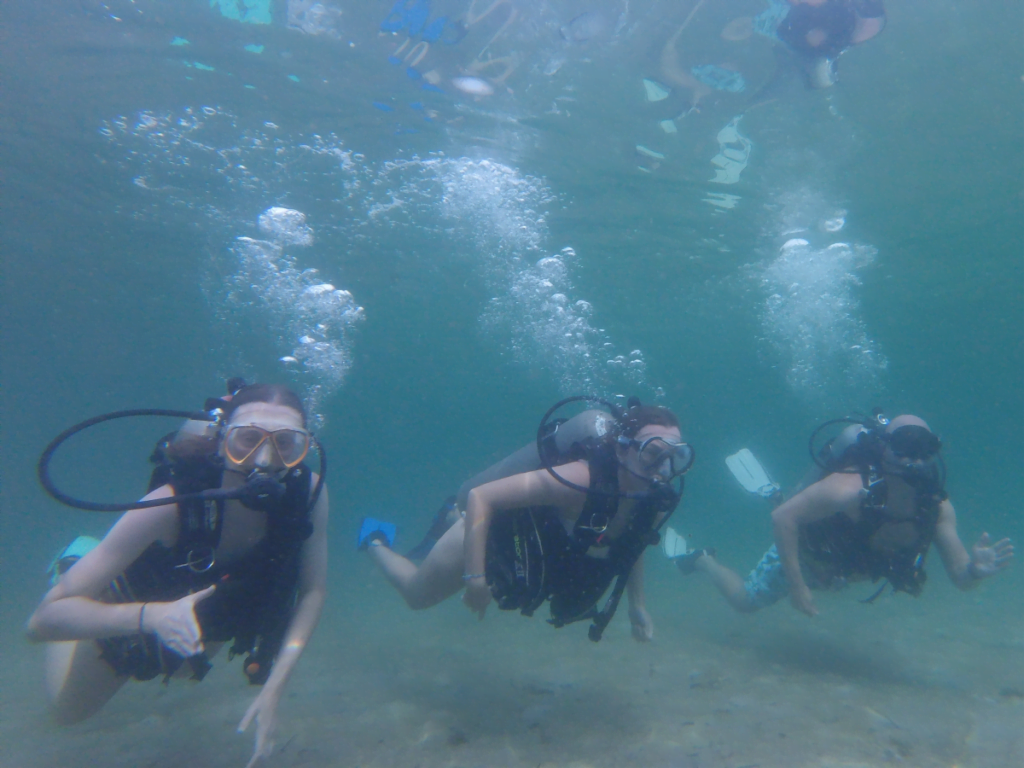
Once underwater, safety depends on calm behavior, clear communication, and constant awareness. Following these beginner scuba diving safety tips helps reduce risk and creates a smoother, more enjoyable dive.
Breathing And Air Management
Beginners should breathe slowly and continuously, using deep and relaxed breaths. Holding your breath must be avoided at all times, as pressure changes can affect the lungs. In addition to breathing calmly, beginners should check their air gauge regularly. Monitoring air supply allows instructors to plan a safe ascent and prevents stress caused by low air situations. This is sometimes managed by your instructor. .
Depth And Buoyancy Control
Staying within assigned depth limits is essential for beginner scuba diving safety. Beginners should avoid sudden movements and make buoyancy adjustments slowly using both breathing control and the BCD. Keeping a stable, horizontal body position improves balance, reduces effort, and helps maintain a safe distance from the bottom and other divers.
Communication And Awareness
Underwater communication relies on clear hand signals. Beginners are taught simple signals such as “OK” to confirm comfort, “up” to signal ascent, and “problem” to request assistance. These signals allow divers to communicate quickly without panic.
Awareness is equally important. Beginners should frequently check their instructor’s position, stay close to the group, and remain aware of surroundings. Avoiding contact with the bottom, reef, or marine life helps protect both the diver and the environment while maintaining a safe and controlled dive.
Common Beginner Scuba Diving Safety Mistakes To Avoid
- Rushing descents – Descending too quickly makes equalization difficult and increases the risk of ear discomfort or injury. Beginners should descend slowly, pause often, and allow pressure to adjust gradually.
- Ignoring discomfort – Pain or pressure in the ears, sinuses, or chest should never be ignored. Discomfort is a signal to stop, stabilize, and alert the instructor immediately rather than pushing through.
Separating from the instructor – Staying close to the instructor is critical for safety. Moving away from the group reduces supervision and increases risk, especially for first-time divers who may need quick guidance or assistance.
How Instructors Manage Safety On Beginner Dives
Instructors manage scuba diving safety through careful planning and constant supervision. Beginner dives are scheduled in calm conditions and shallow depths that match the group’s skill level. During the dive, instructors maintain close positioning, control the pace, and monitor each diver’s comfort and air supply. They are trained in emergency preparedness, carry backup systems, and follow clear response protocols, ensuring beginners are supported and protected from start to finish.
Scuba Diving Safety After The Dive
Professional divers treat the time after a dive as part of the safety process. In addition to proper hydration and rest, they avoid heavy physical activity immediately after diving and stay out of hot tubs or saunas, which can stress the body after pressure exposure. Many also monitor how they feel for several hours, paying attention to unusual fatigue, dizziness, or discomfort and reporting anything abnormal to a dive professional.
Debrief And Feedback
Experienced divers always participate in a detailed debrief. They review air usage, depth control, buoyancy, and communication during the dive. Asking questions and reflecting on small improvements is standard practice, not a sign of inexperience. This habit helps divers correct issues early, improve skills faster, and maintain high scuba diving safety standards on future dives.
Frequently Asked Questions
Is scuba diving dangerous for beginners?
Scuba diving is not dangerous for beginners when done correctly. Proper training, modern equipment, and instructor supervision make beginner dives safe and well controlled.
How do instructors keep beginners safe?
Instructors manage safety by choosing calm dive sites, setting strict depth limits, supervising every step, and monitoring each diver’s comfort and air supply throughout the dive.
What is the most important scuba safety rule?
The most important scuba safety rule is to breathe continuously and never hold your breath. This rule protects the lungs and supports safe pressure changes underwater.
Safe Scuba Diving Starts With Good Habits
Strong safety skills support steady skill progression by helping divers remain calm, aware, and in control underwater. They also build confidence, allowing beginners to enjoy dives without stress and make informed decisions as they gain experience.
If you are ready to start, try a beginner dive in a controlled, instructor-led environment. Continue reviewing scuba diving safety guides to reinforce best practices. Exploring beginner-friendly dive locations is a great way to build experience while staying within safe limits and developing confidence step by step.